Description
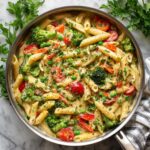
Pasta Primavera Recipe: Fresh veggies tossed in creamy sauce over al dente pasta. Quick, comforting, and crowd-pleasing.
Ingredients
Scale
- 12 oz (340g) pasta (fettuccine, penne, or linguine work well)
- 3 tablespoons (45ml) olive oil, divided
- 1 medium zucchini (about 8 oz/225g), sliced into half-moons
- 1 yellow bell pepper, sliced into thin strips
- 1 red bell pepper, sliced into thin strips
- 8 oz (225g) asparagus, woody ends removed, cut into 2-inch pieces
- 1 cup (150g) cherry tomatoes, halved
- 3 cloves garlic, minced
- 1/2 cup (120ml) vegetable or chicken broth
- 1/2 cup (120ml) heavy cream (optional)
- 1/3 cup (30g) freshly grated Parmesan cheese, plus more for serving
- 2 tablespoons fresh lemon juice
- 1/4 cup fresh basil leaves, torn
- Salt and freshly ground black pepper, to taste
- Red pepper flakes (optional)
Instructions
- Step 1: Prepare Your Ingredients Bring a large pot of salted water to a boil for the pasta. While waiting, wash and chop all your vegetables. Having everything prepped before you start cooking will make the process much smoother. Arrange your chopped vegetables on a cutting board or in small bowls according to their cooking times, with longer-cooking vegetables grouped together.
- Step 2: Cook The Pasta Add the pasta to the boiling water and cook until al dente according to package directions, typically 8-10 minutes. Before draining, reserve 1 cup of the starchy pasta water. Drain the pasta but don’t rinse it—the starch on the surface will help the sauce cling better. Toss with a small drizzle of olive oil to prevent sticking if you’re not immediately adding it to the sauce.
- Step 3: Sauté The Vegetables Heat 2 tablespoons of olive oil in a large skillet over medium-high heat. Add the firmer vegetables first—bell peppers and asparagus—and sauté for about 3 minutes until they begin to soften. Add the zucchini and continue cooking for another 2 minutes. The vegetables should be bright in color and still slightly crisp. Your kitchen will fill with the aromatic scent of fresh vegetables beginning to caramelize.
- Step 4: Add Aromatics And Finishing Vegetables Reduce the heat to medium and add the remaining tablespoon of olive oil along with the minced garlic. Sauté for 30 seconds until fragrant, being careful not to let it brown. Add the cherry tomatoes and cook for just 1 minute more, until they begin to release their juices but still maintain their shape.
- Step 5: Create The Sauce Pour in the broth and bring to a gentle simmer. If using cream, add it now and allow the sauce to simmer for 1-2 minutes until slightly thickened. Add the grated Parmesan cheese and stir until melted and incorporated. The sauce should be light yet creamy, coating the back of a spoon. If it’s too thick, add some of the reserved pasta water, a few tablespoons at a time.
- Step 6: Combine And Finish Add the drained pasta directly to the skillet with the vegetables and sauce. Toss everything together gently but thoroughly, ensuring every strand of pasta is coated with sauce and the vegetables are evenly distributed. Add the fresh lemon juice and half of the basil, then toss again. If the mixture seems dry, add a splash of the reserved pasta water to achieve your desired consistency.
- Step 7: Serve Transfer your Pasta Primavera to a large serving bowl or individual plates. Garnish with the remaining fresh basil leaves, additional Parmesan cheese, and a light sprinkle of red pepper flakes if desired. Serve immediately while hot, passing extra Parmesan at the table for those who want an additional cheesy kick.
Notes
Fresh ingredients will always yield the best flavor results.
Nutrition
- Serving Size: 1.5 cups
- Calories: 380 kcal
- Sugar: 6g
- Sodium: 540mg
- Fat: 18g
- Saturated Fat: 7g
- Unsaturated Fat: 10g
- Trans Fat: 0g
- Carbohydrates: 45g
- Fiber: 6g
- Protein: 10g
- Cholesterol: 20mg